Phone:
(701)814-6992
Physical address:
6296 Donnelly Plaza
Ratkeville, Bahamas.
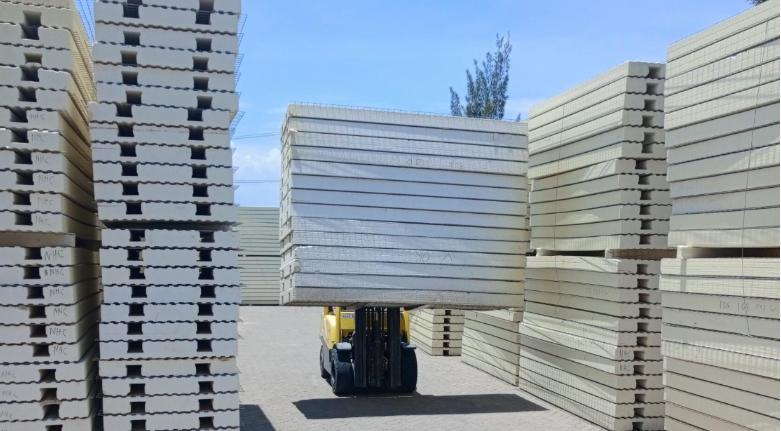
Construction moves slowly. Old materials stay in circulation long after better alternatives exist, partly because familiarity is comfortable and partly because change costs confidence. But across residential, commercial, and industrial projects, one shift is happening without much fanfare — builders who have worked with EPS panels once tend not to go back to the way things were done before. The reasons are not just about insulation values. They go deeper into how a building actually performs across decades, not just at handover.
Conventional masonry is heavy. That weight travels downward through the structure, which means foundations need to be engineered around it, transport costs stack up, and the labour to handle it across a build site adds time that nobody budgets for accurately. EPS panels are a fraction of the weight of the materials they often replace. On elevated structures, on lightweight steel frames, and on sites where ground conditions make heavy foundations difficult, that reduction in load changes what is structurally possible. Less weight at the top means less engineered redundancy at the bottom, and that flows through every subsequent decision on the project.
Here is what rarely gets explained properly. Thermal resistance in a wall system is not just about the insulation material — it is about whether that resistance holds across the entire surface or collapses at the joints, studs, and frame elements. Traditional framed walls with batt insulation lose a significant portion of their rated thermal performance through the timber or steel frame itself, a phenomenon called thermal bridging. EPS panels form a continuous layer across the building envelope with no interruptions. The rated performance is much closer to the actual in-use performance, which is not something most insulation systems can honestly claim.
Moisture management in building assemblies usually involves a sequence of separate products — a frame, a membrane, an insulation layer, another membrane, then cladding. Each layer is an additional trade, an additional cost, and an additional failure point. EPS does not absorb water. Rain that penetrates cladding and reaches an EPS core does not wick, soak, or migrate through the panel the way it would through mineral wool or loose-fill insulation. EPS panels in a composite form — bonded between structural skins — handle moisture intrusion with fewer layers and fewer opportunities for assembly error. This simplicity is underrated in an industry where sequencing mistakes cause most of the moisture problems that show up years later.
Speed on Site Is Structural, Not Just Logistical
There is a tendency to frame faster construction as purely a scheduling advantage. It is more than that. Every additional week a building sits exposed and unenclosed is a week where weather events, moisture intrusion, and labour inefficiencies compound. EPS panel systems arrive site-ready, pre-cut to dimension in many cases, and install without the drying times that wet trades introduce. The building envelope closes faster. The internal trades can begin sooner. The compounding delays that push projects well past their original programme are largely driven by wet concrete, wet plaster, and weather holds — all of which are reduced when panel systems replace conventional methods.
Most people associate EPS with thermal insulation and stop there. The acoustic performance of a well-designed EPS panel wall is often genuinely surprising. The mass of the skins, combined with the damping effect of the foam core, breaks the path of airborne sound more effectively than a lightweight framed wall with batt insulation. In medium-density residential settings, in commercial fit-outs, and in any building where sound separation between tenants or spaces matters, this acoustic performance arrives without any additional specification or added product.
The building industry rarely abandons familiar methods quickly, but EPS panels have made consistent inroads precisely because the performance case is difficult to argue against. Thermal continuity, moisture resistance, structural weight reduction, speed of enclosure, and acoustic damping all improve within a single system. For designers, builders, and developers working through what materials to specify on the next project, the question is less about whether EPS performs and more about why it was not specified sooner.